
An AI Receptionist for small business can help companies answer calls, capture leads, schedule appointments, route customers, and manage routine communication without requiring a full time receptionist for every interaction. As small businesses receive more customer calls while operating with limited staff, AI receptionist technology provides a practical way to improve availability and reduce repetitive administrative work.
Unlike a traditional automated phone menu, an ai receptionist for small business can understand natural language, respond to customer questions, collect information, and take actions based on the conversation. When connected to a CRM, calendar, or other business systems, the AI receptionist can become part of a broader customer service and workflow automation strategy.
For companies looking for the Best AI receptionist for small business, the right solution should not be selected based only on whether it can answer a phone call. Businesses should also consider appointment booking, lead capture, CRM integration, call routing, customization, scalability, and the ability to transfer complex conversations to human employees.

Zaptron helps small and growing businesses identify practical AI receptionist use cases and connect voice automation with the systems they already use.
What Is an AI Receptionist?
An AI receptionist is an artificial intelligence system designed to handle routine phone interactions on behalf of a business. An ai receptionist for small business can answer incoming calls, understand what the caller needs, provide information, collect contact details, route calls, and perform other predefined actions.
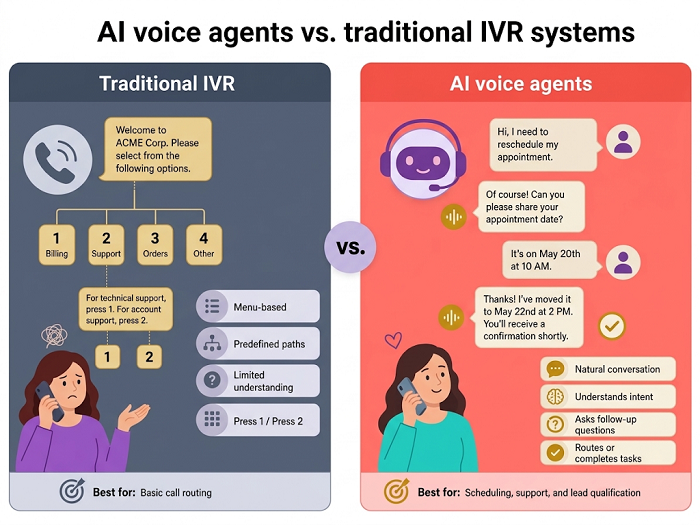
Traditional receptionists handle these tasks manually, while conventional automated phone systems often require callers to select numbers from a menu. An AI receptionist provides a more conversational experience by allowing customers to explain what they need using natural language.
For example, a customer calling a plumbing company may say that they have a leaking pipe and need a technician as soon as possible. The AI receptionist can identify the request, collect the customer’s location and contact information, determine the urgency, and route the information to the appropriate team.
This makes an ai receptionist for small business particularly useful for companies where missed calls can directly result in lost customers.
AI receptionists can also be customized for specific industries. A dental ai receptionist, for example, can handle dental appointment requests, answer common questions about services, collect patient information, and route calls to staff when necessary.
Similarly, ai receptionist for plumbers solutions can be configured around emergency service requests, service areas, appointment scheduling, and lead qualification.
How an AI Receptionist Works
An ai receptionist for small business combines voice recognition, artificial intelligence, business rules, and software integrations to manage conversations.
When a customer calls, the system processes the caller’s speech and determines the purpose of the conversation. The AI then provides an appropriate response based on the company’s information and the instructions configured for the receptionist.
Depending on the setup, the AI receptionist can answer questions, collect information, schedule appointments, transfer calls, or trigger another business workflow.
For example, consider a customer calling a dental clinic. The AI receptionist may identify that the caller wants to schedule a cleaning, ask for the preferred date, check the connected calendar, schedule the appointment, and provide confirmation.
The same concept can be applied across many industries. A contractor can use an AI receptionist to capture new project inquiries, a law firm can use it to collect initial information, and a home service company can use it to handle service requests.
The most effective ai receptionist for small business solutions are therefore connected to the company’s actual operations rather than functioning as standalone phone answering systems.
Key Benefits for Businesses
The main advantage of an ai receptionist for small business is the ability to handle routine customer communication consistently while allowing employees to focus on more valuable work.
Call Answering and Routing
A major benefit of an AI receptionist is answering calls when employees are busy or unavailable.
An ai receptionist for small business can identify the reason for a call and route it to the appropriate department or employee. It can also provide basic information without requiring a member of staff to answer every routine question.
This can be particularly valuable for businesses that receive calls while employees are working on projects, serving customers, or visiting job sites.
More information about AI Voice Agents for businesses.
Lead Capture and Qualification
Every unanswered sales call can represent a potential lost opportunity. An ai receptionist for small business can capture important information during the first conversation.
Depending on the business, the receptionist can collect:
- Customer name and contact information
- Service requirements
- Location
- Project details
The information can then be transferred to a CRM or sales workflow.
This allows employees to focus on qualified opportunities instead of manually processing every incoming inquiry.
Appointment Booking
Appointment scheduling is one of the most practical applications for an ai receptionist for small business.
The AI receptionist can identify the customer’s preferred service, check availability through an integrated calendar, schedule the appointment, and provide confirmation details.
For appointment based businesses, this can reduce administrative workload while allowing customers to schedule services without waiting for an employee.
A dental ai receptionist, for example, can support routine appointment requests, while an ai receptionist for plumbers can help customers request service visits based on availability.
CRM and Workflow Integration
The real value of an ai receptionist for small business increases when the system connects with existing business software.
Instead of simply answering calls, the AI receptionist can send information to a CRM, create tasks, update customer records, trigger follow ups, or notify employees.
For example, after receiving a new lead, the system could automatically create a CRM record, assign the lead to a salesperson, and trigger a follow up workflow.
This turns the AI receptionist into part of a broader business automation system.
AI Receptionist Canada: What Should Canadian Businesses Consider?
Businesses searching for AI Receptionist Canada solutions should consider more than the basic ability to answer calls.
The solution should be compatible with the company’s existing phone systems, CRM, scheduling tools, and customer management processes. Businesses should also consider data handling, security, customization, reporting, and how the system handles calls that require human assistance.
Local relevance can also matter for businesses serving specific Canadian markets. A company targeting Toronto, for example, may specifically search for an AI Receptionist Toronto solution that can support its customer base and business operations.
The goal should be to find an AI receptionist that fits the company’s workflow rather than simply choosing a generic voice automation product.
How to Choose the Right Solution
Choosing the Best AI receptionist for small business starts with identifying the tasks that create the most operational friction.
A business should first determine how many calls it receives, how many are repetitive, how often calls are missed, and which conversations require employee involvement.
The next step is evaluating the capabilities of different AI receptionist platforms.
Important features to consider include:
- Natural language conversations
- Call answering
- Call routing
- Lead capture
- Lead qualification
- Appointment booking
For a small business, simplicity is also important. The Best AI receptionist for small business should be practical to implement and easy to manage without creating unnecessary technical complexity.
Businesses should also consider the quality of the customer experience. The AI should communicate clearly, understand common customer requests, and know when a conversation should be transferred to a human employee.
AI Receptionist for Different Small Business Industries
An ai receptionist for small business can be adapted to many industries because the underlying workflow can be customized around the company’s specific requirements.
For dental practices, a dental ai receptionist can help with appointment requests, basic service questions, confirmations, and call routing.
For plumbing companies, ai receptionist for plumbers solutions can capture service requests, collect locations, identify urgent situations, and help schedule technicians.
Professional service businesses can use AI receptionists to collect inquiries and qualify potential clients. Home service companies can use them to manage appointment requests and customer questions.
This flexibility is one of the key reasons AI receptionist technology is becoming increasingly relevant to small businesses.
FAQ About AI Receptionist for small businesses
1.What Is an AI Receptionist?
An AI receptionist is an artificial intelligence system that handles routine business phone interactions. An ai receptionist for small business can answer calls, understand customer requests, provide information, capture leads, schedule appointments, and route conversations to employees.
2.How Does an AI Receptionist Answer Calls?
An AI receptionist uses speech recognition and artificial intelligence to understand what callers say and generate appropriate responses. Instead of relying exclusively on traditional phone menus, the system can conduct conversational interactions and take actions based on the customer’s request.
3.Can an AI Receptionist Book Appointments?
Yes. An ai receptionist for small business can be connected to a calendar or scheduling platform to check availability, book appointments, provide confirmations, and potentially send reminders.
4.How Much Does an AI Receptionist Cost?
The cost of an AI receptionist depends on factors such as call volume, conversation length, integrations, customization, features, and the service provider. Businesses should evaluate ai receptionist for small business pricing alongside potential savings from reduced administrative work, fewer missed calls, faster lead response, and increased appointment bookings.
Conclusion
An ai receptionist for small business can transform routine phone communication into a more efficient and connected business process. From answering calls and routing customers to capturing leads, booking appointments, and updating CRM systems, AI receptionists can reduce repetitive work while improving customer availability.
The right solution depends on the company’s industry, call volume, workflows, and technology infrastructure. A dental practice may need a dental ai receptionist, while a plumbing company may benefit from specialized ai receptionist for plumbers workflows.
For businesses comparing the Best AI receptionist for small business, the priority should be finding a solution that does more than answer calls. The most valuable AI receptionist connects conversations to the systems and workflows that drive the business.
For Canadian companies evaluating AI Receptionist Canada solutions or businesses specifically searching for an AI Receptionist Toronto provider, Zaptron can help identify suitable use cases and design AI receptionist workflows that connect customer communication with broader business automation.



One Response