

What Is a Virtual Receptionist Service?
A virtual receptionist service helps businesses manage incoming phone calls and customer inquiries without requiring a receptionist to be physically present in the office. It can answer calls, greet customers, collect contact details, schedule appointments, respond to common questions, and transfer callers to the appropriate team member.
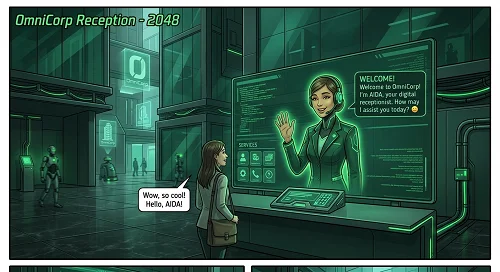
Unlike a traditional receptionist who works at a company’s front desk, a virtual receptionist operates remotely. Depending on the service, this role may be performed by a trained human receptionist, an AI voice agent, or a combination of both.
For businesses exploring smarter communication solutions, Zaptron develops AI voice agent solutions for inbound and outbound calls, helping organizations automate routine conversations, respond to customer inquiries, and manage communication more efficiently.
The important distinction is that virtual does not automatically mean AI powered. Some virtual receptionist services rely entirely on human operators, while others use conversational AI to manage calls automatically. The right option depends on call volume, business requirements, budget, and the level of personalization required.

Where Did the Virtual Receptionist Service Originate?
There is no widely verified historical record identifying a single inventor, company, or exact date when the virtual receptionist service was first introduced. Instead, the service developed gradually from earlier telephone answering systems, call forwarding technologies, and outsourced receptionist services.
According to Ruby’s history of virtual receptionists, the telephone’s introduction in 1876 marked an important turning point in business communication. As companies began receiving more calls, answering and directing those calls became an increasingly important administrative responsibility.
Later, call forwarding made it possible to manage business calls from outside a traditional office. This created the foundation for remote receptionist services, allowing operators to answer calls for businesses without being physically located at their premises.
The next major development came with internet-based communication, cloud telephony, and advances in artificial intelligence. Modern virtual receptionist services can now combine natural language processing, automated call routing, appointment scheduling, and customer relationship management (CRM) integrations.
Therefore, 1876 is a milestone in telephone history, not the confirmed launch date of the virtual receptionist service. Today’s service is the result of several decades of technological and operational development.
Key Features of a Virtual Receptionist Service
The exact features vary by provider, but most services focus on improving how businesses handle customer communication.
1. Automated Call Answering
A virtual receptionist answers incoming calls using a customized business greeting. Instead of reaching voicemail or receiving no response, callers can immediately interact with a receptionist that identifies their needs and directs the conversation.
AI based systems can handle routine calls automatically, including outside normal business hours.
2. Intelligent Call Routing
Not every caller needs the same department. A virtual receptionist service can identify whether someone is calling about sales, customer support, billing, appointments, or an urgent issue.
It can then transfer the call to the right person or collect the information needed for a follow-up. This reduces unnecessary transfers and helps employees focus on the calls that require their attention.
3. Appointment Scheduling
For businesses that work by appointment, a virtual receptionist can manage booking requests, confirm available time slots when connected to a suitable calendar, and send appointment confirmations or reminders.
This is particularly valuable for healthcare practices, dental clinics, consultants, salons, and home service providers.
4. Customer Information Collection
During a conversation, the receptionist can collect relevant information such as the caller’s name, phone number, service requirements, location, and preferred appointment time.
Depending on the system’s capabilities, this information can be delivered through email, text messages, call summaries, or CRM integrations.
5. Frequently Asked Questions
Businesses often receive repetitive questions about opening hours, pricing policies, service areas, appointment availability, and service offerings.
A virtual receptionist can answer approved questions using the business’s information and instructions. More advanced AI voice agents can understand natural language rather than requiring callers to follow rigid menu options.
6. After-Hours and Overflow Call Handling
Customer inquiries do not always arrive during business hours. A virtual receptionist can provide coverage during evenings, weekends, holidays, lunch breaks, and periods of high call volume.
Businesses can also configure escalation rules so urgent calls reach an on-call employee while routine requests are recorded for later follow-up.
What Are the Main Benefits of a Virtual Receptionist Service?
Reduced Missed Calls and Lost Opportunities
When employees are busy serving customers, attending meetings, or working on-site, incoming calls can easily go unanswered. A virtual receptionist helps capture those inquiries and collect the information needed to follow up.
For businesses that rely on phone calls to generate revenue, this can help protect potential sales and service bookings.
Lower Front Office Costs
Hiring a full-time receptionist involves salary, training, equipment, and other employment expenses. A virtual receptionist service provides an alternative, particularly for smaller businesses that do not need a dedicated employee at the front desk.
The actual savings depend on the provider, call volume, service model, and required features.
More Consistent Customer Experience
A properly configured receptionist follows a consistent greeting, collects relevant information, and applies the business’s call-handling rules. This helps create a more professional first impression and reduces the likelihood of important details being overlooked.
Greater Employee Productivity
Employees can spend more time on their core responsibilities instead of repeatedly answering routine questions or interrupting their work to manage calls.
For AI based services, automation can also help handle multiple calls simultaneously, depending on system capacity and configuration.
Flexible and Scalable Communication
As a company grows, its communication needs may change. A virtual receptionist service can often be adjusted to accommodate additional calls, new departments, different business hours, or new appointment workflows without establishing another physical reception desk.
However, businesses should review call limits, integration requirements, and escalation procedures before choosing a provider.
Which Industries Can Benefit from a Virtual Receptionist Service?
A virtual receptionist service is useful across industries where phone calls are important for customer acquisition, scheduling, or service delivery.
- Healthcare and dental clinics: Manage appointment requests, answer administrative questions, and direct patients to the appropriate team. Sensitive medical inquiries should follow suitable privacy and escalation procedures.
- HVAC and plumbing companies: Capture repair requests, collect job locations, identify urgent service needs, and arrange callbacks while technicians are working in the field.
- Legal and accounting firms: Collect initial client information, route inquiries, and schedule consultations while keeping professional staff focused on their work.
- Real estate agencies: Handle property inquiries, collect buyer or tenant details, and arrange viewing appointments.
- E-commerce and retail: Answer questions about business hours, order processes, delivery policies, and customer support.
- Home service businesses: Help electricians, cleaning companies, landscapers, and maintenance providers respond to inquiries while employees are on-site.
- Professional services and small businesses: Provide a more organized communication experience without the cost of a full-time front-office employee.
The value is especially high when calls arrive while employees are busy, when customers expect quick responses, or when missed inquiries can lead to lost revenue.
Virtual Receptionist Service vs. AI Receptionist
Although the terms are often used interchangeably, they are not identical.
A virtual receptionist service describes the remote delivery of receptionist functions. It may use human operators, AI software, or a hybrid model.
An AI receptionist specifically uses artificial intelligence to understand and respond to callers. Depending on its configuration, it can manage conversations, qualify leads, book appointments, and handle repetitive requests automatically.
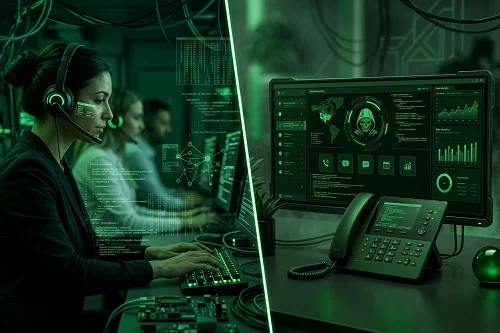
Human receptionists may be better suited to situations requiring nuanced judgment or personal attention. AI receptionists can be particularly useful for repetitive workflows, extended coverage, and handling concurrent calls. A hybrid model can combine automation with human support for complex cases.
For businesses evaluating these options, the key questions are what the system can actually do, how it handles unfamiliar requests, and when it transfers a caller to a human.
Frequently Asked Questions
1. What does a virtual receptionist service do?
It manages business calls remotely by answering inquiries, taking messages, routing calls, collecting customer details, and potentially scheduling appointments. Specific capabilities depend on the provider and service model.
2. Is a virtual receptionist service powered by AI?
Not necessarily. Some services use remote human operators, while others use AI voice agents. Hybrid services combine both approaches.
3. Can a virtual receptionist service operate 24/7?
Many providers offer round-the-clock coverage, particularly AI based services. Businesses should confirm operating hours, system availability, and procedures for urgent calls before selecting a solution.
4. Is a virtual receptionist service suitable for small businesses?
Yes. It can help small businesses respond to customers while owners and employees focus on sales, service delivery, and daily operations. The best option depends on call volume and budget.
5. Can a virtual receptionist book appointments?
Yes, if the service supports appointment scheduling and has access to the relevant calendar or booking system. Without that integration, it may only collect appointment requests for staff to confirm later.
6. What is the difference between a virtual receptionist and an answering service?
A basic answering service may primarily take messages and forward them to a business. A virtual receptionist generally performs a broader set of front-desk tasks, such as call screening, routing, answering routine questions, and appointment scheduling. The exact distinction varies by provider.
7. How can businesses choose the right virtual receptionist service?
Businesses should compare the available human and AI options, supported languages, call capacity, scheduling features, CRM integrations, pricing structure, data protection practices, and escalation procedures. Testing realistic customer scenarios before deployment can help identify limitations.
Conclusion
A virtual receptionist service gives businesses a flexible way to manage customer communication without maintaining a traditional reception desk. From answering calls and booking appointments to collecting leads and supporting after-hours inquiries, it can improve accessibility, reduce repetitive work, and create a more consistent customer experience.
As conversational AI advances, businesses can go beyond basic call answering and automate more complex communication workflows. Zaptron develops AI voice agents for both inbound and outbound calls, helping businesses explore practical ways to automate customer interactions, capture opportunities, and build more efficient communication processes.


One Response