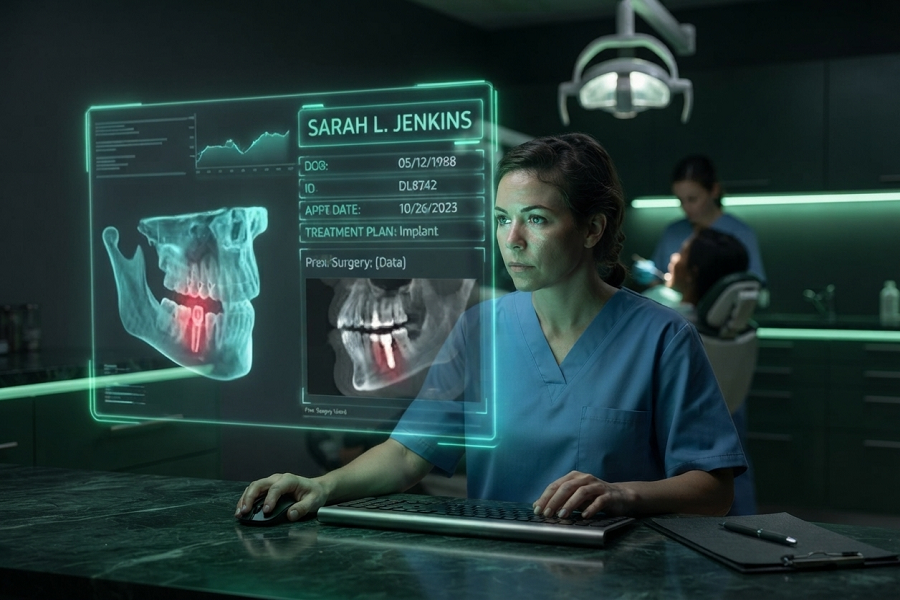
A dental clinic can have excellent dentists, modern equipment, and a strong reputation, but there’s one surprisingly simple thing that can still cost it patients: a phone call that nobody answers.
Picture a new patient finding your clinic on Google, picking up the phone, and hitting a busy signal. Or a patient calling during lunch, when the receptionist is away from the desk. Maybe the call gets answered, but the team is already mid-conversation with another patient and can’t spare several minutes to walk through services, insurance, and scheduling.
The patient calls another clinic instead.
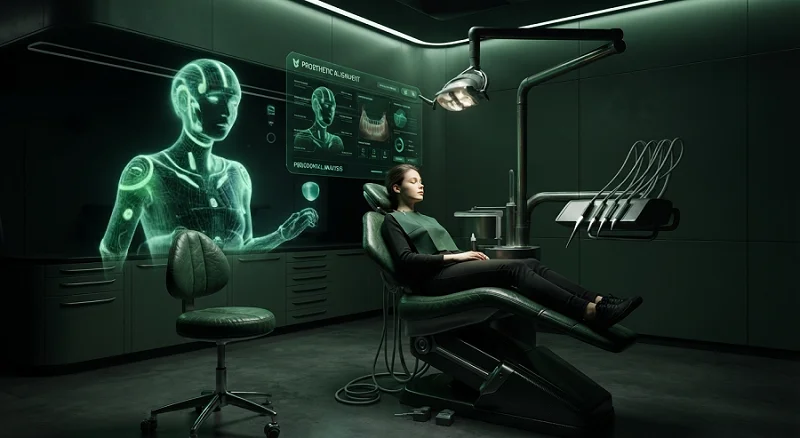
This is where Zaptron sees a practical opening for AI. An AI receptionist for dental clinics can handle many of these everyday conversations answering common questions, helping patients schedule appointments, following up on missed calls, and handing anything more complex to a real member of the dental team.
This isn’t about making a dental office feel less human. It’s the opposite: pulling repetitive communication away from the front desk so the people working there have more time for the patients actually standing in front of them.
Why Dental Clinics Need More Than a Traditional Receptionist
The front desk of a dental practice is a genuinely busy place.
One moment the receptionist is checking in a patient. The next, the phone rings. Someone wants to reschedule. Another patient has an insurance question. A new caller wants to know whether the clinic takes their coverage.
Handling all of it at once is hard, even for an experienced team.
The American Dental Association points out that phone communication remains a key first interaction for prospective patients, and recommends that practices answer calls promptly and maintain consistent communication practices. The ADA also warns that clinics can lose prospective patients when calls go unanswered quickly enough, or when callers don’t feel a personal connection with whoever picks up.
That’s the important part: the phone is often part of the patient experience before anyone ever walks through the door.
A well designed AI receptionist for dental clinics supports that first interaction without requiring the human front desk team to be reachable every single minute of the day.
What Can This Kind of System Actually Do?
Think of a dental AI receptionist as a digital member of the front desk team.
It answers incoming calls, understands what the patient needs, provides approved information about the clinic, collects basic details, and helps with appointment scheduling.
For example, a new patient might call and say:
“I’ve been having tooth pain and I’d like to know if I can get an appointment this week.”
Instead of routing the caller through a long phone menu, the assistant can hold a natural conversation, understand the request, ask the necessary questions, and check available scheduling options.
If the request falls outside its defined scope, it transfers the conversation to a member of the clinic team.
That boundary matters. A good AI receptionist should never pretend to be a dentist. It should know exactly where its responsibility ends clinical diagnosis and treatment decisions stay with qualified dental professionals. The AI’s role is administrative and communicative, not clinical.
Appointment Scheduling
Scheduling is one of the areas where dental practices get the most value from automation.
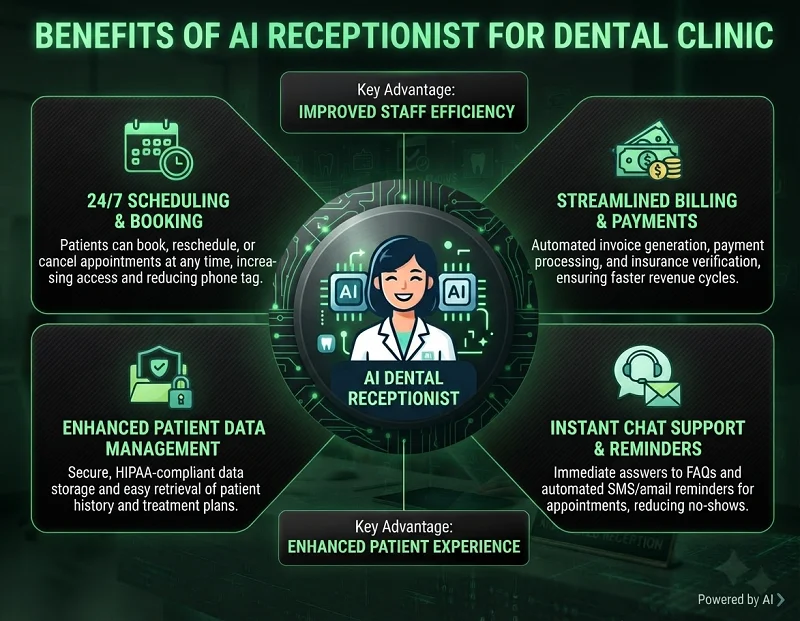
Patients call to book a first appointment, move an existing one, ask about available times, or schedule their next cleaning. Connected to the clinic’s scheduling or practice management system, an AI receptionist can manage these routine conversations directly.
And the conversation doesn’t have to end once the appointment is booked the system can handle confirmations and follow ups too.
This matters because keeping the schedule full is a constant operational challenge. The ADA has reported that patient cancellations and short-notice no-shows are among the biggest factors keeping practices from reaching full appointment capacity.
The ADA also recommends appointment reminders through phone, email, or text, and notes that practices should choose whichever communication method actually works for their patient base.
An AI receptionist turns those recommendations into a consistent process instead of one more task someone has to remember at the end of a long day.
What Happens When the Clinic Misses a Call?
This is one of the simplest use cases, and sometimes the most valuable.
A patient calls. Nobody answers. Instead of losing that conversation entirely, the AI receptionist can respond according to the clinic’s workflow collecting the patient’s information, answering basic questions, or helping them request an appointment.
That’s especially useful outside normal office hours. A patient searching for a dentist at 8 p.m. doesn’t stop needing one just because the front desk has gone home.
The ADA specifically notes that practices can lose prospective patients through poorly managed incoming calls including situations where callers hang up because the phone wasn’t answered quickly, or because they didn’t feel connected with whoever did answer.
An AI receptionist doesn’t eliminate the need for a human team. It just gives the clinic another way to respond when that team is unavailable.
Supporting Patient Recare and Reactivation
There’s another side of dental communication that’s easy to overlook: patients who already know the practice.
Someone may have visited six months ago and never booked their next appointment. Another patient started treatment and stopped responding. Others just need a nudge that it’s time to come back.
The ADA recommends having systems in place to track patients who haven’t scheduled their recare appointments and engage them to keep them active in their ongoing oral healthcare.
This is an ideal area for automation. Instead of relying entirely on staff to manually review lists and place calls, an AI receptionist can become part of the reactivation workflow reaching out to eligible patients, having a simple conversation, and helping them move toward their next appointment.
That turns the receptionist from someone who just answers the phone into part of a broader patient communication system.
Does This Make a Dental Practice Feel Less Personal?
This is probably the most reasonable concern a practice can raise.
Dental care is personal. Patients get nervous about treatment, confused about procedures, or simply need reassurance from someone they trust. Nobody wants to feel like they’re talking to a machine when what they actually need is genuine help.
That’s exactly why the goal shouldn’t be automating every conversation.
The better approach automates what’s predictable and repetitive, while keeping human staff involved wherever empathy, clinical judgment, or a more complex discussion is required.
An AI receptionist can reasonably handle:
appointment requests, basic clinic information, scheduling questions, confirmations, and routine follow-ups.
But a patient with a complicated clinical concern, an unusual complaint, or anything requiring professional judgment should go straight to the right person on the team.
The ADA’s own guidance emphasizes the importance of a friendly, calm, and attentive communication style when dealing with patients by phone a standard any automated system needs to be held to as well.
So the objective isn’t less human communication.
It’s better use of human communication.
AI Receptionist Canada and AI Receptionist Toronto
For dental practices searching for an AI Receptionist Canada solution, localization and workflow integration matter just as much as the underlying voice technology.
A dental clinic in Toronto may have different scheduling practices, patient expectations, business hours, and communication requirements than a practice in another market. The AI receptionist should be configured around the actual clinic — not deployed as a generic chatbot with a phone number bolted on.
The same principle applies to an AI Receptionist Toronto solution specifically: the technology needs to fit the clinic’s existing systems, staff workflow, appointment process, and patient communication style.
This approach isn’t limited to dentistry, either. Similar models can be adapted for an AI receptionist for plumbers, an AI receptionist for HVAC companies, medical practices, legal firms, real estate businesses, and other service based companies where a missed call can quietly become a missed opportunity.
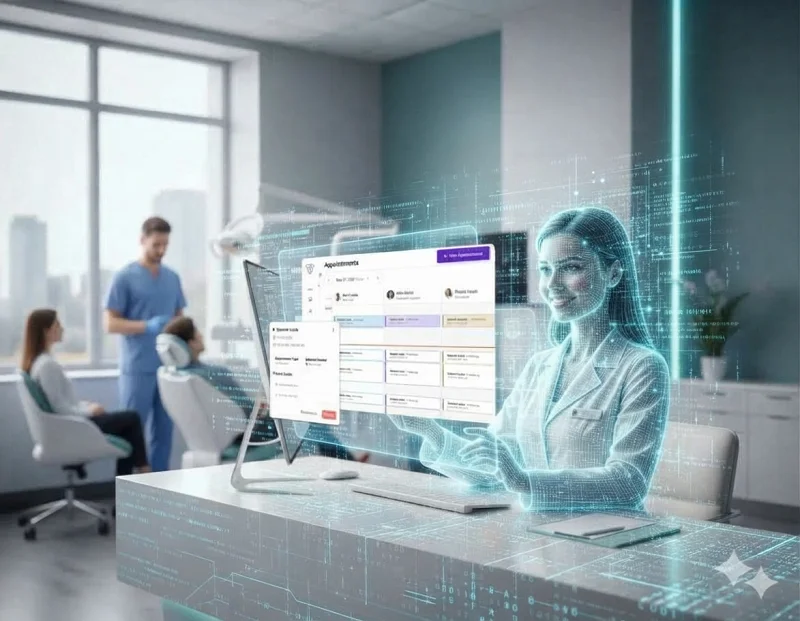
How Zaptron Can Help Dental Clinics
Zaptron approaches AI automation as a business workflow not simply bolting an AI voice onto a phone line.
For a dental practice, that means designing the system around the clinic’s actual services, frequently asked questions, appointment rules, escalation process, and existing software.
The agent can be configured to answer routine calls, help patients with scheduling, capture new patient information, support follow-ups, and know exactly when it’s time to bring a human into the conversation.
The bigger benefit shows up at the front desk itself. Instead of constantly switching between the patient standing in front of them and the phone ringing beside them, staff can put their attention where it matters most.
For the patient, the experience gets simpler too: call the clinic, explain what you need, and get help without being bounced around.
That’s what a well-designed AI receptionist for dental clinics should ultimately achieve not replacing the human experience, but making it easier for the dental team to deliver it.
Frequently Asked Questions
1-Can an AI receptionist book dental appointments?
Yes. When connected to the clinic’s scheduling system, it can help patients find suitable appointment times and book or request appointments according to the clinic’s rules.
2-Can a dental AI receptionist answer questions about treatments?
It can answer approved general and administrative questions services, appointment procedures, clinic hours, or how to contact the practice. Clinical diagnosis and treatment recommendations should always remain with qualified dental professionals.
3-Can an AI receptionist handle missed calls?
Yes. It can respond when staff are unavailable and collect information or help the caller with the next step, depending on how the workflow is configured.
4-Can it help reduce missed dental appointments?
It can support appointment confirmation and reminder workflows. The ADA specifically recommends consistent appointment reminders and patient communication as part of managing cancellations and missed appointments.
5-Is an AI receptionist suitable for a small dental clinic?
Yes, smaller practices may benefit significantly, since a small front desk team is often responsible for a disproportionately large volume of calls, appointments, and administrative tasks. The key is automating the repetitive parts of communication while keeping human support available when patients need it.
6-Is an AI receptionist HIPAA compliant?
HIPAA compliance depends on how the complete system is designed, configured, integrated, and operated. Dental practices should evaluate how patient information is collected, stored, transmitted, and processed, and confirm that any relevant vendors and workflows meet their legal and privacy obligations.


One Response